How to Order at an Italian Restaurant: Phrase Guide
Table of Contents
Ever been handed a menu that’s only in Italian and had to reach for Google Translate to figure out what to order? Here’s everything you need — how Italian menus are structured, exactly what to say, and what the waiter will ask you back — so you never need the translator app again.
How is an Italian menu structured?
An Italian menu is split into six parts, always in this order:
- Antipasti (“starters”) — small dishes eaten before the main course, like bruschette al pomodoro (“tomato bruschetta”) or prosciutto e melone (“cured ham and melon”). It’s common to order one antipasto to share between two people.
- Primi piatti (“first courses”) — anything with pasta, rice, or soup, like spaghetti alla carbonara or risotto ai funghi (“mushroom risotto”).
- Secondi piatti (“second courses”) — meat or fish, like bistecca alla fiorentina (“Florentine steak”) or branzino al forno (“baked sea bass”).
- Contorni (“side dishes”) — usually vegetables, most commonly patate al forno (“roast potatoes”) and insalata mista (“mixed salad”), eaten alongside a secondo.
- Dolci (“desserts”) — like tiramisù or panna cotta.
- Bevande (“drinks”) — sparkling or still water, red or white wine, coffee, liqueurs.
Italians typically order an antipasto, a primo, a secondo, and a dolce when eating out — but it’s not compulsory. Plenty of people just order a primo, or a secondo with a side.
How do you ask for the menu?
- Potrei avere il menù? — “Could I have the menu?”
- Mi può portare il menù? — “Could you bring me the menu?”
How do you order food or drinks in Italian?
Three phrases cover almost every situation: potrei avere (“could I have”), vorrei (“I’d like”), and per me (“for me”), followed by the dish or drink you want.
- Vorrei un piatto di spaghetti alla carbonara. — “I’d like a plate of spaghetti carbonara.”
- Per me una bistecca alla fiorentina. — “For me, the Florentine steak.”
Ordering for someone else? Use per lei for a woman and per lui for a man:
- Per me un piatto di spaghetti alla carbonara, per lei una bistecca alla fiorentina. — “For me the spaghetti carbonara, for her the steak.”
- Per me un piatto di spaghetti alla carbonara, per lui una bistecca alla fiorentina. — “For me the spaghetti carbonara, for him the steak.”
How do you ask about a dish or modify your order?
To ask for a recommendation or more information:
- Che cosa mi consiglia? — “What do you recommend?”
- Quali ingredienti ci sono in questo piatto? — “What ingredients are in this dish?”
To modify an order, use senza (“without”) to remove something and con aggiunta di (“with added”) to add something:
- Potrei avere una pizza capricciosa senza funghi? — “Could I have a pizza capricciosa without mushrooms?”
- Potrei avere una pizza margherita con aggiunta di olive? — “Could I have a margherita pizza with added olives?”
Want more essential Italian phrases?
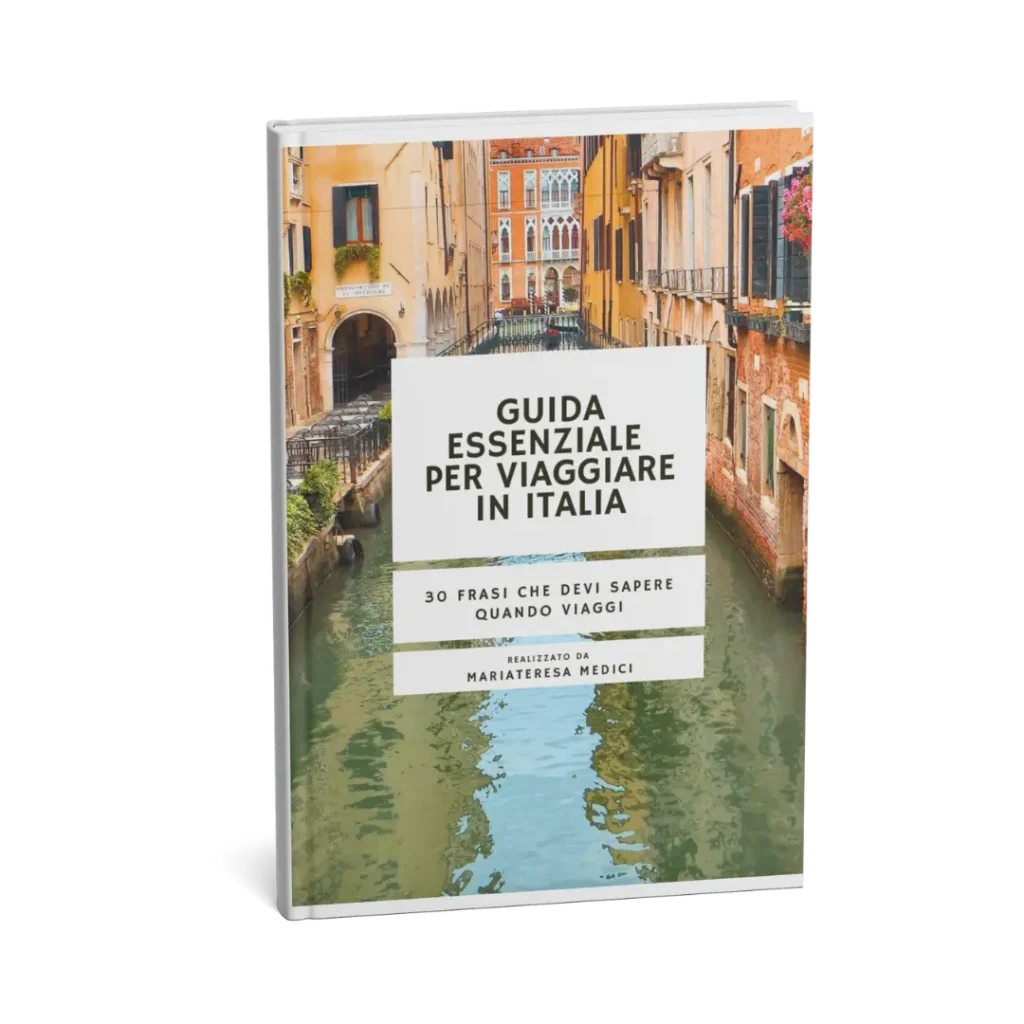
Download my free guide with 30 Italian phrases to travel in Italy.
How do you ask for the bill and pay?
- Il conto, per favore! — “The bill, please!”
- Posso pagare in contanti? — “Can I pay in cash?”
- Posso pagare con la carta di credito? — “Can I pay by credit card?”
What will the waiter say to you?
Knowing the questions coming your way makes the whole exchange much less stressful:
- Buongiorno / Buonasera, ecco il menù. Ha prenotato? (or Avete prenotato? if you’re a group) — “Good morning/evening, here’s the menu. Do you have a reservation?”
- Posso portarle qualcosa da bere? (or Vi posso portare…? for a group) — “Can I bring you something to drink?”
- È pronto per ordinare? (or Siete pronti…?) — “Are you ready to order?”
- Cosa desidera? (or Che cosa desiderate?) — “What would you like?”
- Tutto bene? — “Is everything alright?”
- Ecco il conto! — “Here’s the bill!”
How do you order breakfast at an Italian bar?
The classic Italian breakfast is a cornetto (“croissant”) and a cappuccino. Useful phrases:
- Vorrei un caffè, per favore. — “I’d like a coffee, please.”
- Un cappuccino e un cornetto alla crema, per favore. — “A cappuccino and a custard-filled croissant, please.” (Other common fillings: al cioccolato — “chocolate”, alla marmellata — “jam”)
- Posso avere un succo d’arancia, per favore? — “Can I have an orange juice, please?”
- Per me un caffè macchiato, per favore. — “For me, a macchiato, please.”
One thing to know: when Italians order an espresso, they just say un caffè — “a coffee.” It’s the default, and almost everyone means an espresso unless they specify otherwise.
At the bar, expect to hear:
- Buongiorno, come posso aiutarla? — “Good morning, how can I help you?”
- Un caffè normale o macchiato? — “A regular coffee or a macchiato?”
- Desidera lo zucchero? — “Would you like sugar?”
- Sono due euro, per favore. — “That’s two euros, please.”
Quick recap
- Menus run: antipasti → primi → secondi → contorni → dolci → bevande
- Order with vorrei, per me, or potrei avere
- Senza to remove an ingredient, con aggiunta di to add one
- At the bar, an espresso is simply un caffè
Now you’re ready to order like a local on your next trip to Italy.
Want to know your Italian level?
Take the free quiz and find out in 2 minutes.